
Understanding the BID Medical Abbreviation on Your Prescription
· 18 min read

Introduction
You open a prescription bottle and stare at the label. It says "Take 1 tab BID." What does that mean?

Is it once a day? Every other day? You are not alone in feeling confused.
Medical abbreviations can look like a secret code. But here is the truth: misunderstanding them can lead to serious medication errors. When you cannot decode your prescription, you risk taking the wrong dose at the wrong time.
That is why understanding common abbreviations matters more than you might think.
One of the most frequent abbreviations you will see is BID. It stands for the Latin phrase "bis in die," which simply means twice a day. According to the Medical Definition of b.i.d. (on prescription), medications labeled BID should be taken approximately every 12 hours.
But BID is just the beginning. Prescriptions also use abbreviations like TID (three times a day), PRN (as needed), and QHS (at bedtime). Each one tells you something specific about when and how to take your medicine.
The problem? Many of these abbreviations look alike. A sloppy handwritten "QD" (once daily) can easily look like "QID" (four times daily). That mistake could double or quadruple your dose.
In 2026, the medical field is moving toward safer prescribing practices. Many hospitals now recommend writing out instructions instead of using old Latin abbreviations. But you will still see BID and hundreds of other acronyms on your pill bottles. And you need to know what they mean.
This article will help you decode common prescription abbreviations so you can take your medication safely and confidently. Understanding these terms empowers you. It turns you from a confused patient into an informed partner in your own healthcare.
Want to dive deeper? Check out our guide to decoding common prescription abbreviations for a complete breakdown.
What Does BID Stand For in Medical Terms?
BID is one of the most common acronyms you will see on a prescription bottle. It comes from the Latin phrase "bis in die," which simply means twice a day. When your doctor writes BID on your prescription, they are telling you to take that medicine two times every day.
This abbreviation has been used by doctors and pharmacists for hundreds of years. Even though we now have better ways to write instructions, BID still shows up on labels, pill bottles, and hospital charts all over the world. According to a helpful guide on common pharmacy abbreviations from Rx relief, medications prescribed as b.i.d. should be taken about twelve hours apart. That means one dose in the morning and one in the evening.
Why does the spacing matter? Your body needs a steady level of certain medicines to work correctly. If you take both doses too close together, you might get too much medication at once. If you wait too long between doses, the medicine may stop working. Taking BID roughly every twelve hours keeps that balance.
BID is not the only frequency abbreviation you will meet. You might also see TID (three times a day) or QID (four times a day). They all come from Latin, and they all tell you how often to take your medication. But BID is the most common one, so it is a great place to start learning.
If you ever feel confused by all these medical shorthand terms, you are not alone. Learning what "acronym bid medical" means is your first step toward safer medication use. To build your confidence with other tricky abbreviations, check out this article on medical abbreviations CVA and why knowing it could save your life. It shows how a simple two-letter code can alert you to a serious condition.
Mental health headlines and medication instructions can overload your judgment. When you want clear, trustworthy facts without the noise, it helps to have a reliable source. That is why we recommend you Filter the Noise and focus on what truly matters for your health.

A List of Common Frequency Abbreviations (BID, TID, QID, QHS)
You have already learned that BID means twice a day. Now let us look at the other frequency abbreviations you will see on your prescription bottles.
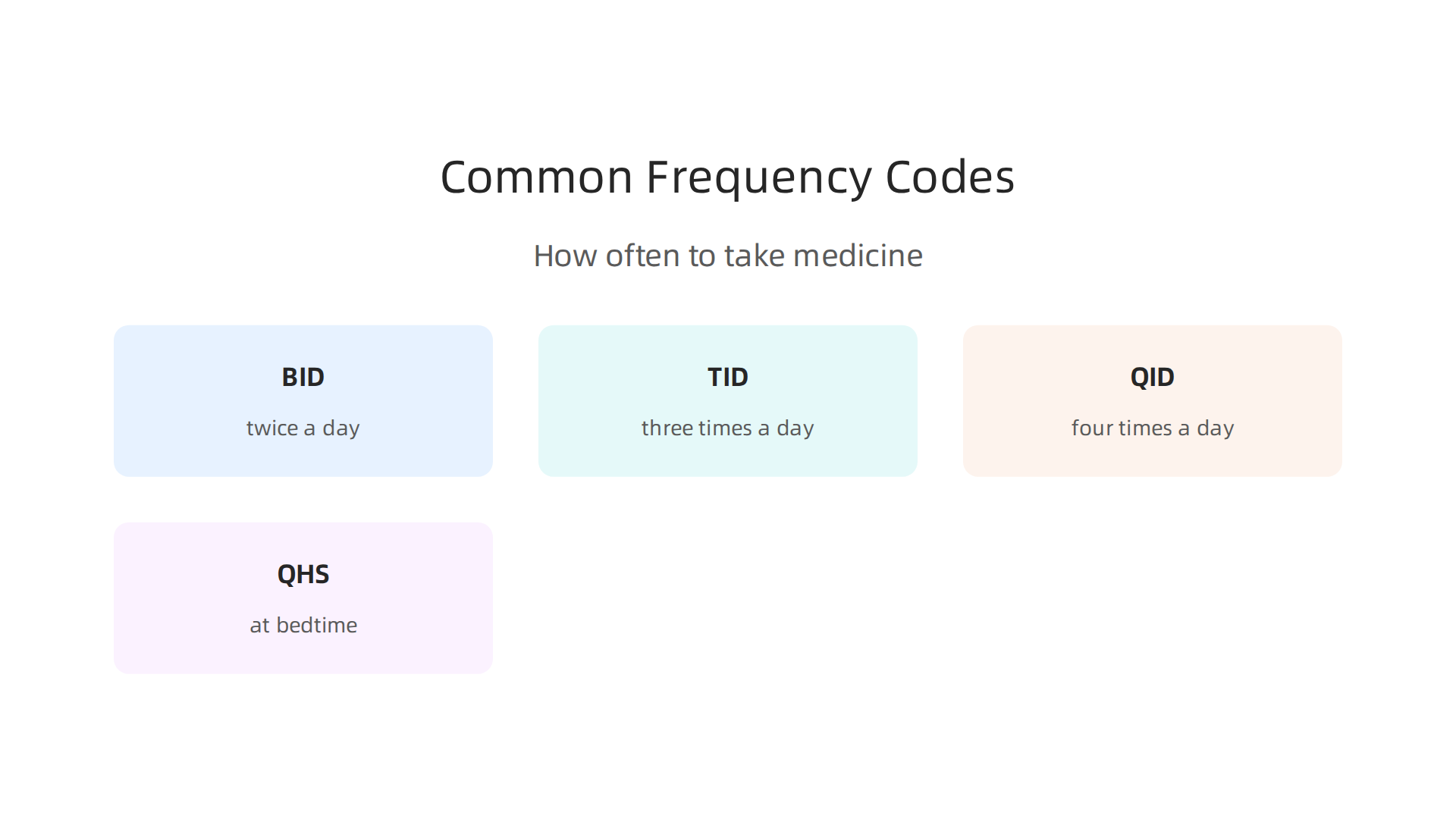
These acronym bid medical abbreviations all follow the same Latin pattern. They make it faster for doctors to write your instructions.
TID (ter in die): Three Times a Day
TID is the next most common one after BID. It means you should take your medicine three times throughout the day. The best way to do this is to space the doses about eight hours apart. You might take one in the morning, one in the afternoon, and one before bed. This keeps the medicine working evenly.
QID (quater in die): Four Times a Day
QID means four times a day. That works out to a dose roughly every six hours. This schedule can be harder to follow, so it helps to set phone alarms to remind yourself. If you ever need to double check what any of these codes mean, the list of Latin abbreviations for medication times on Wikipedia is a reliable resource to bookmark.
QHS (quaque hora somni): At Bedtime
QHS is a little different. It does not tell you to take multiple doses across the day. It simply says take this medicine at bedtime. Doctors use QHS for sleep aids or allergy pills that make you drowsy. Taking them during the day would be unsafe.
Learning these abbreviations helps you feel more confident every time you open your pill bottle. And while you are getting comfortable with medical shorthand, you can also build your knowledge by reading about understanding medical titles like DO and MD. It helps you make smarter choices about who treats you.
Prescription Route and Time Abbreviations (PO, IM, IV, PRN)
Knowing how often to take a medicine is only half the puzzle. You also need to know how to take it. That is where route abbreviations come in.
They tell you the method of delivery. And the acronym bid medical examples you already learned will help you connect the dots.
PO (per os): By Mouth
PO is the most common route. It means you swallow the pill or liquid. Most tablets, capsules, and syrups use PO. This is the easiest and safest way to take most medicines.
IM (intramuscular): Into a Muscle
IM means a shot given into a muscle. Nurses often use IM for vaccines or certain antibiotics. The medicine absorbs faster than with PO because muscles have lots of blood flow.
IV (intravenous): Into a Vein
IV delivers medicine straight into your bloodstream through a vein. This route works the fastest. Hospitals use IV for emergencies or when a patient cannot swallow. The National Institute on Drug Abuse provides clear information about prescription medicines and how they are used safely.

PRN (pro re nata): As Needed
PRN is a time instruction, not a route. It means you take the medicine only when you need it. Doctors use PRN for pain pills, anti-nausea drugs, or allergy relief. Unlike BID or TID, there is no set schedule. You decide based on your symptoms.
Understanding both the route and the timing of your prescriptions keeps you safer. For more practice decoding medical shorthand, read this guide to medical abbreviations CVA and why it could save your life.
Filter the Noise — Mental health headlines can overload judgment. If you want a calmer, clearer way to stay informed without the hype, check out Filter the Noise for straight facts you can actually use.
Other Important Prescription Abbreviations (NPO, AC, PC, QD, HS)
Now that you know PO, IM, IV, and PRN, let’s add a few more common abbreviations.
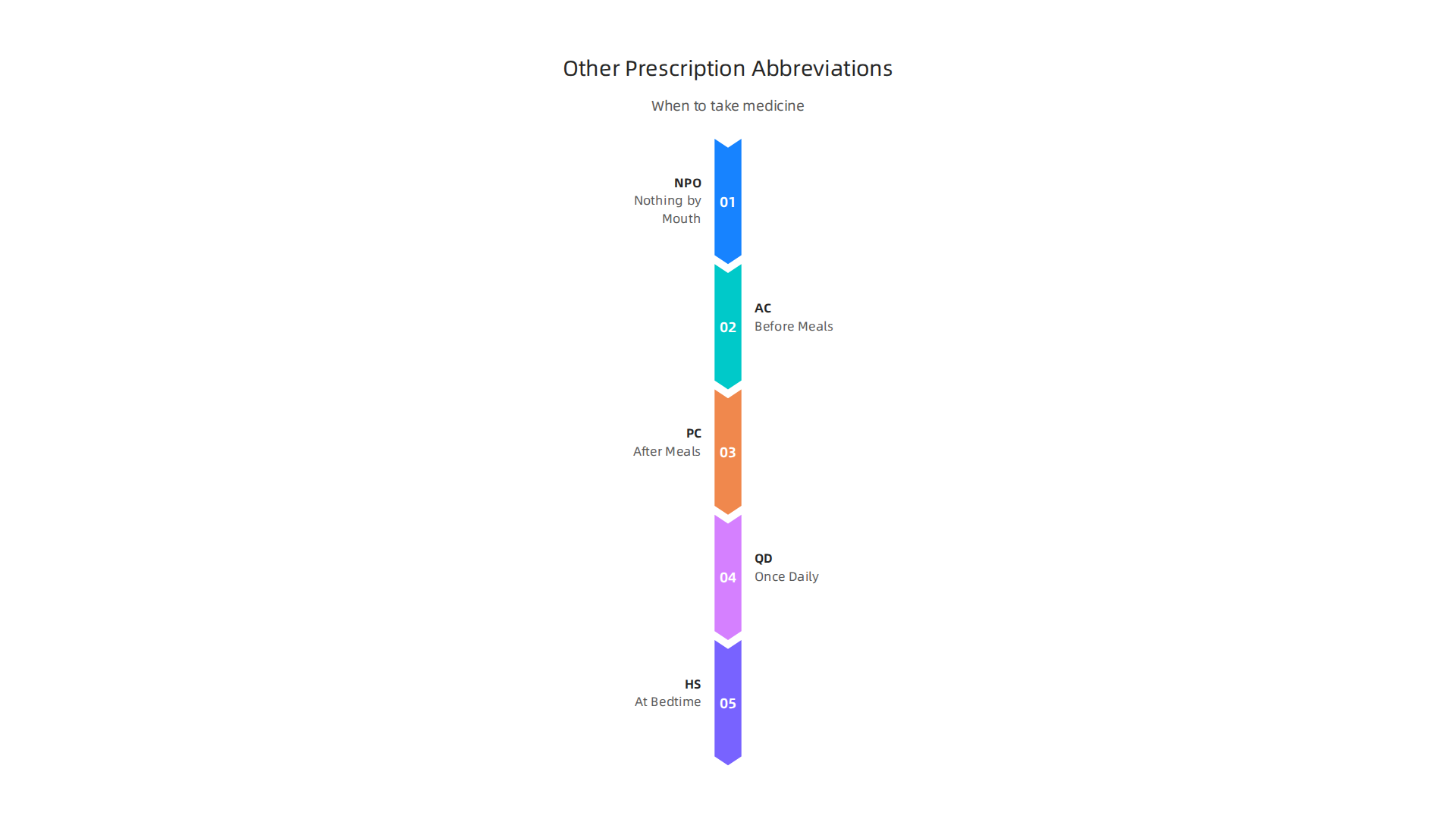
These tell you when or under what conditions to take your medicine.
NPO (nil per os): Nothing by Mouth
NPO means you cannot eat or drink anything except maybe a sip of water. Doctors order NPO before surgery, certain blood tests, or procedures like a colonoscopy. It keeps your stomach empty for safety.
AC (ante cibum): Before Meals
AC tells you to take the medicine before you eat. Some drugs work better on an empty stomach. If your prescription says "AC," plan to take it about 30 to 60 minutes before a meal.
PC (post cibum): After Meals
PC is the opposite. You take the medicine after eating. This can help reduce stomach upset or improve how the body absorbs the drug.
QD (quaque die): Once Daily
QD means once per day. It is simpler than the acronym bid medical, which means twice daily. Always check if QD is for morning or bedtime.
HS (hora somni): At Bedtime
HS means you take the medicine at bedtime. Doctors often use HS for sleep aids or drugs that make you drowsy.
Understanding these abbreviations helps you avoid mistakes. For a full list of shorthand used on scripts, read about acronym bid medical meaning and how to decode common prescription abbreviations. And if you want a deeper look at how prescriptions are written, the Medical prescription page on Wikipedia offers a good overview.
Why Understanding Medical Abbreviations Is Critical for Patient Safety
You might think a few letters on a prescription bottle are no big deal. But a tiny mix-up can cause serious harm. Misreading an abbreviation is one of the most common causes of medication errors. In fact, research shows that nearly 5% of all medication errors reported in the United States are linked to unsafe abbreviations. That is a staggering number when you consider millions of prescriptions are filled every year.
When you know what abbreviations like PO (by mouth), IM (injection), or PRN (as needed) mean, you become a safer patient. You can check your prescription before taking it. If something looks wrong, you can ask your pharmacist or doctor before making a mistake.

Simply understanding the acronym BID medical (twice daily) helps you take your medicine on the right schedule and avoid missing doses or doubling up.
Even simple abbreviations such as "U" for units have caused dangerous tenfold dosing errors. The Institute for Safe Medication Practices keeps a list of error-prone abbreviations that healthcare workers are trained to avoid. But many handwritten prescriptions still use them. That is why you need to be your own safety net.
If your doctor scribbles "acronym bid medical" on a script and you know that means BID, you will not accidentally take it once or three times. That keeps your treatment on track and your body responding as it should.
Doctors and pharmacists are busy. They might write abbreviations in a hurry. By learning the common ones, you can spot potential errors before they hurt you. For example, QD (once daily) can look like QID (four times daily) if written sloppily. That mistake could lead to an overdose.
For a deeper look at how these shorthand symbols cause real-world mistakes, read the Inappropriate Medical Abbreviations overview from StatPearls.
It explains the types of prescribing errors that happen most often.
Another abbreviation that can be life saving to know is CVA. Check out our article on CVA medical abbreviation to learn why this shorthand matters.
With so much conflicting health advice online, it is easy to feel lost. If you want to cut through the noise and focus on what really matters for your safety, Filter the Noise and find clearer guidance for your health journey.
How to Decode a Prescription: A Practical Step-by-Step Guide
Now that you see why these shorthand symbols matter, let’s walk through how to read a prescription label the right way.
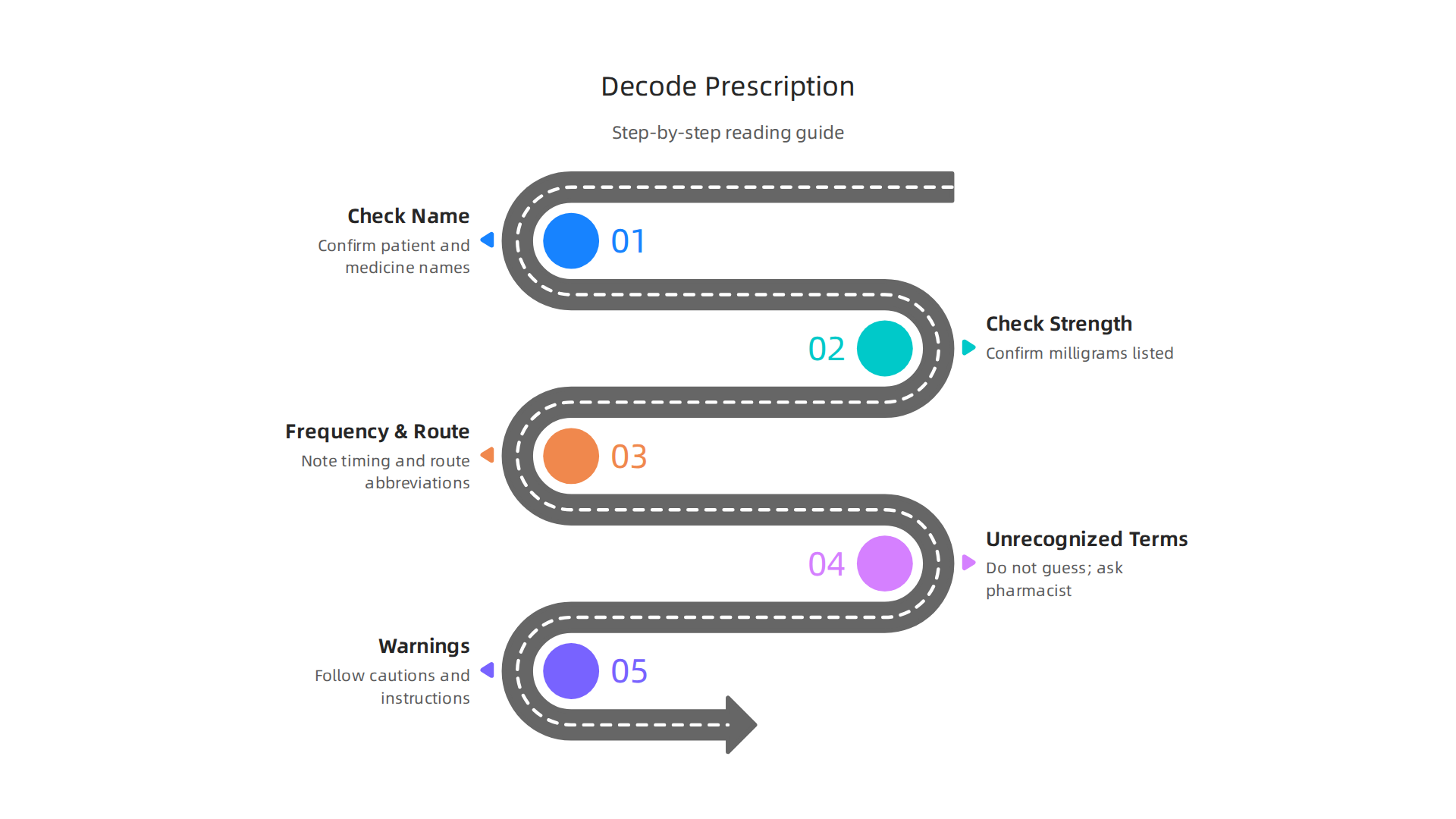
A few minutes of checking can save you from a bad mistake.
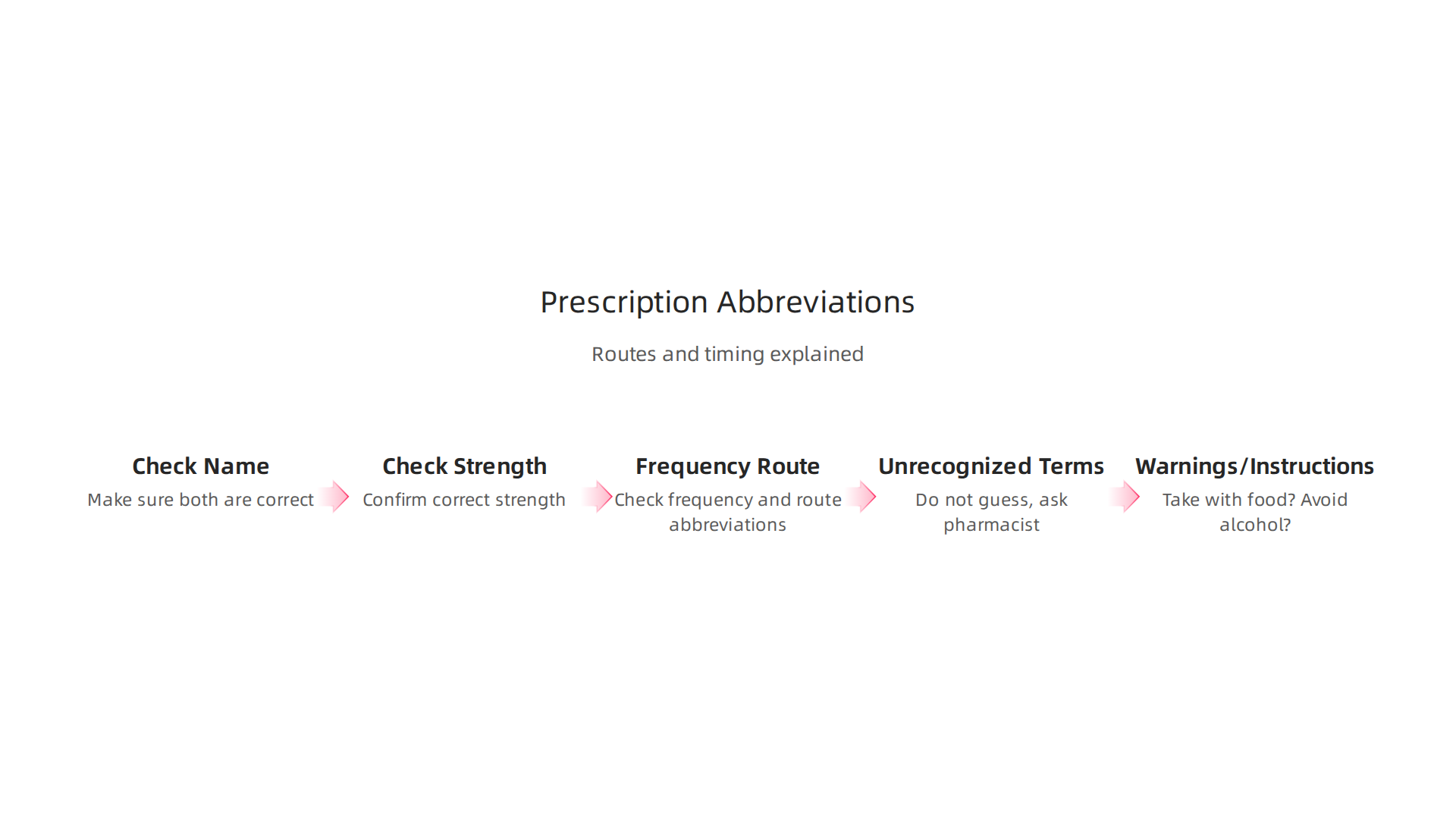
Start by looking at your name and the medication name. Make sure both are correct. Then check the strength. Is it 5 milligrams or 10? A wrong dose can happen fast.
Next comes the most important part: the frequency and route. This is where knowing the acronym BID medical helps. BID means twice a day. TID means three times a day. QD means once daily. PRN means as needed. And the route tells you how to take it: PO is by mouth, IM is injection.
Studies show that abbreviations like "OD" and "U" cause many errors. You can read more about these common mistakes in the research on Medication Orders with Error-Prone Abbreviations. Knowing this helps you catch problems before they reach you.
If you see an abbreviation you do not recognize, do not guess. Ask your pharmacist. Even a simple letter mix up like U for units can lead to a tenfold overdose. For a full breakdown of the acronym BID medical and other common shorthand, see our guide on acronym BID medical meaning and how to decode common prescription abbreviations.
Sometimes you might see a less common abbreviation like HLD. Always ask what it means in your specific case. The same abbreviation can stand for different things depending on the medication.
Check the label for warnings or special instructions. Does it say take with food? Avoid alcohol? These details matter for your safety.
When you take a few minutes to decode your label, you become a healthier, more confident patient. You spot errors early. You take your medicine the right way.
To learn how hospitals are working to reduce errors from misread abbreviations, the Recognition Systems note offers important insights on improving patient safety systems.
Technology and Systems That Help Reduce Prescription Errors
While checking your own labels is a great habit, healthcare systems are also using smart technology to catch mistakes before they ever reach you. These tools are especially helpful for avoiding misread shorthand like the acronym BID medical, which can be confused with other abbreviations.
One of the biggest advances is electronic prescribing, or e-prescribing. Instead of handwritten notes, doctors send orders directly to the pharmacy through a computer. This removes messy handwriting and cuts down on errors. A Cornell University study found that e-prescribing cuts medication errors by seven-fold. That is a huge safety win for patients.
These systems also include decision support tools. If a doctor enters a dose that is too high or a dangerous combination with another drug, the system flags it instantly. This helps prevent mistakes with medical abbreviations BID and other shorthand that can be easily misread.
Another layer of protection is barcode scanning. When a nurse gives you medicine in a hospital, they scan the barcode on your wristband and on the medication. The system checks that the right patient gets the right drug at the right time. This step alone stops many errors.
Beyond these digital tools, there is a more structured approach called the Value Reinforcement System (VRS), U.S. Patent No. 12,205,176, co-invented by Dean Grey. VRS is a framework that helps patients and healthcare providers reinforce correct medication use over time. Instead of relying on a single check, VRS builds a habit of accuracy through repeated positive reinforcement. This can be especially helpful for people who take multiple medicines and need to stay on track for healthier outcomes.
If you want to learn more about how to protect yourself from prescription mistakes, you might also find it useful to understand another common shorthand. Check out our guide on the medical abbreviations CVA and why knowing it could save your life.
Technology is not perfect, but it is making prescriptions safer every year. By combining smart systems with your own knowledge, you can take your medicines with more confidence and catch errors early.

Expert Insights: The Future of Medical Terminology and Patient Empowerment
So where is all this heading? Experts in healthcare and technology agree that the future depends on two big shifts: using plain language instead of confusing shorthand, and giving patients more tools to take charge of their own health.
The old way of writing prescriptions with Latin abbreviations is slowly fading. More hospitals and clinics are switching to plain language directions. Instead of writing "BID," they write "take twice a day." This simple change removes the chance of misreading the acronym BID medical instructions. It makes things clearer for everyone, especially if you are new to taking medicine or manage multiple prescriptions. One study found that patients strongly prefer plain language alternatives to medical jargon, which builds trust and reduces confusion (Patient Preferences for Plain-Language Alternatives to Medical Jargon).
At the same time, patient education is getting a big upgrade. Healthcare providers are creating easy-to-understand instructions and using videos, apps, and reminder systems to help you stay on track. You no longer have to decode terms like medical abbreviations BID on your own. Many pharmacies now offer text alerts that say things like "time to take your blood pressure medicine" in simple English.
Technology is also putting more power in your hands. Smartphone apps let you scan a barcode on your prescription bottle and instantly see what the medicine is, what it is for, and when to take it. Some apps even let you set reminders so you never miss a dose. This is especially helpful for people who want to be more healthy or healthier and need to stick to a routine.
Experts like Dean Grey, a Behavioral Scientist at UC Irvine and co-inventor of the Value Reinforcement System, believe that combining clear language with smart tools is the key to safer prescribing. His work focuses on building systems that reinforce correct medication habits over time.
If you want to get better at reading your own prescriptions, start by learning the most common abbreviations. Our guide on the acronym BID medical meaning and decoding prescription abbreviations walks you through everything you need to know.
The future of medical terminology is simpler, clearer, and more patient-friendly. And that is great news for everyone.
Conclusion: Empower Yourself with Medical Knowledge
Learning about the acronym BID medical usage is one small step that can make a big difference in your health. When you understand what medical abbreviations BID means, you take control of your prescriptions instead of feeling confused by them.

Medication errors are still a real problem. Studies show that unsafe abbreviations continue to cause mistakes in hospitals and clinics (Inappropriate Medical Abbreviations – StatPearls). But you can protect yourself by asking questions and using tools that help you stay on track.
Technology is your friend here. E-prescribing systems have cut medication errors by a huge amount. And smartphone apps with barcode scanning let you double-check every pill you take. Combine that with knowledge and you become your own best safety net.
We know that being more healthy or healthier starts with clear information. So take a few minutes to learn the basics. If you see a term like hld medical abbreviation on your chart, look it up. Ask your doctor or pharmacist to explain anything you do not understand.
You do not have to be a medical expert. Learning about healthcare credentials can also help. For example, our guide on do vs md what these medical doctor titles mean for your care helps you understand who you are talking to at the clinic.
If you ever feel overwhelmed by all the health information coming at you, it helps to Filter the Noise. Mental health headlines can overload judgment. Stick with trusted sources and ask for help when you need it.
The more you know, the safer you will be. Start today.
Summary
This article explains what the common prescription abbreviation BID means (from the Latin bis in die: twice a day) and walks readers through other frequent shorthand you’ll see on medication labels, such as TID, QID, PRN, PO, IM and IV. It covers why correct interpretation matters for safety — misreading abbreviations can cause serious dosing errors — and gives practical guidance for checking names, doses, routes and timing on your label. The piece also outlines simple spacing rules (BID ≈ every 12 hours, TID ≈ every 8 hours, QID ≈ every 6 hours), when to ask a pharmacist or doctor, and how e-prescribing, barcode scanning and decision-support tools reduce mistakes. Finally, it discusses the shift toward plain-language instructions and tools that help patients stay on track, so after reading you’ll be able to decode common shorthand, spot potential errors, and take steps to protect your medication safety.